

Many companies procure their vehicles based on purchase price or leasing rate. However, this approach can lead to miscalculations, especially for fleets of between 50 and 3,000 vehicles. Total cost of ownership (TCO) shows what a vehicle really costs over its entire life cycle.
What TCO means
TCO covers all costs incurred during the use of a vehicle: purchase or leasing, financing, energy or fuel, maintenance, tyres, insurance, taxes, infrastructure and residual value.
Only this overall view reveals the differences between vehicle types – for example, between different brands, but also, and above all, between combustion engine vehicles and electric cars.
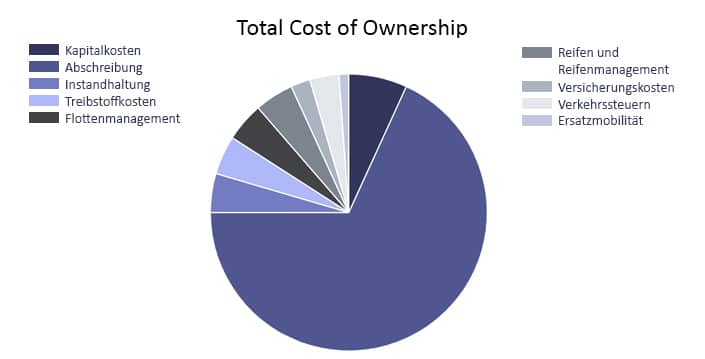
Why TCO is crucial for fleets
Investment security: Residual values, leasing terms and charging infrastructure can be calculated realistically.
Transparency: With an average of around 15,000 kilometres per year, even small differences per kilometre add up to significant amounts.
Cost stability: Electricity prices for companies are currently around CHF 0.24/kWh, fuel prices around CHF 1.60–1.80/litre – price fluctuations make pure consumption cost comparisons unreliable.
Regional differences: Cantons vary greatly in terms of taxes and subsidies. A TCO analysis reflects these factors.
The advantages of TCO-based procurement
Strategic control – Uniform TCO models enable benchmarking within the fleet.
Objective comparability – decisions are based on figures rather than list prices or emotions.
Cost optimisation – reduction of total costs per kilometre by exploiting competition in the fleet market. Constant comparison of individual TCO cost elements leads to optimised total costs.
Risk reduction – identify market changes early on and eliminate the consequences of fluctuations.
Conclusion
Those who procure vehicles based on TCO today make better, more sustainable and more cost-effective decisions in the long term. The method creates transparency, reduces risks and enables fleet managers to act strategically rather than reactively.
TCO is not an additional expense – it is the basis for economical vehicle procurement.
procorp works with the TCO approach
For over 10 years, we have been tendering vehicle fleets for corporate customers using the TCO approach. We know where the cost levers are in TCO and how they can be influenced. We would be happy to show you how you can benefit from this method.